Who Can Get Dental Implants, And Who Is At Rısk?
Dental implants are a safe, comfortable option for many with adequate bone and health, from young adults to seniors. Chronic diseases aren't automatic barriers if controlled. For a definitive answer, a detailed exam is key. #İmplanttr
Who Can Get Dental Implants, and For Whom Is It Risky?
Dental implants are one of the most frequently chosen and comfortable solutions today to replace missing teeth. However, despite being a widespread and successful treatment, implants cannot be done for everyone and in every situation.
In this article, without drowning you in medical terms, we will answer the following questions in a language everyone can understand:
-
Who can get dental implants?
-
In which situations is implant treatment risky?
-
How do factors like age, chronic illness, and smoking affect implants?
Remember: What you will read here is for general informational purposes. The final decision must always be made by your examining dentist and, when necessary, the relevant medical doctors.
The General Requirement for Dental Implants: Sufficient Bone and Suitable Health Status
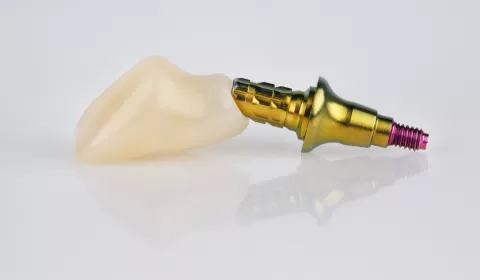
A dental implant is an artificial root placed into the jawbone. Therefore, the two most basic requirements for an implant are:
-
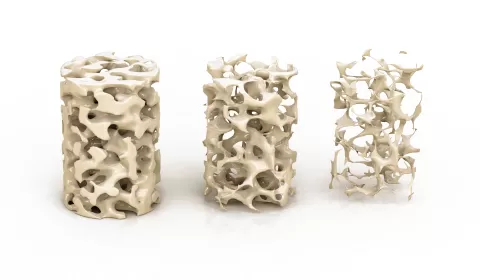
Sufficient quantity and quality of jawbone
-
General health status being suitable for surgery
With a good panoramic X-ray and, if needed, a 3D tomography scan, the following are evaluated:
-
Bone thickness,
-
Bone height,
-
Bone density,
-
The position of nerve and sinus cavities.
Additionally, the patient's:
-
Age,
-
Medications used,
-
Chronic illnesses
are questioned in detail.
An implant should only be placed if, after this evaluation, it is deemed "safe and suitable for you."
Generally, Who Can Get Implants?
To draw a simple framework, many people with the following characteristics can get implants:
-
Young adults over 18 whose jaw development is complete
-
People with enough bone volume in the jaw to support the implant
-
Patients with diseases like diabetes, hypertension, but whose conditions are under control with medication
-
Individuals who can commit to regular tooth brushing and oral care
-
Patients who can follow the dentist's recommendations and not miss check-up appointments
So, saying "I have a chronic illness, I can't get implants" is often not correct. What matters is whether the illness is under control.
The Age Factor: At What Age Can You Get Implants?
The determining factor for implants is not age, but health status.
-
Lower age limit:
Waiting for jaw development to complete is necessary. This is generally around age 18, but can vary from person to person. Temporary solutions may be preferred over implants at very young ages. -
Upper age limit:
Theoretically, there is no clear upper age limit. People aged 60, 70, or even over 80 can get implants if their general health is suitable. What's important here is:-
Diseases like cardiovascular issues, diabetes, and hypertension being under control,
-
Knowledge of the medications used,
-
Whether the bone structure is sufficient to support the implant.
-
In summary: "I'm old, I can't get implants anymore" is not an entirely accurate statement. After examination, suitable planning can be done for most elderly patients.
Can Diabetics Get Implants?
Diabetes is an important condition to consider regarding implant treatment. Because uncontrolled diabetes:
-
Can delay wound healing,
-
Can increase the risk of infection,
-
Can negatively affect the success of the implant fusing with the bone.
However, this does not mean "Implants can never be done on diabetics."
-
In diabetic patients who use medication regularly, whose HbA1c values are within acceptable limits, and who are monitored by their doctor,
implants can be successfully applied with proper planning and strict hygiene monitoring.
The condition here is the dentist working in collaboration with an internal medicine/endocrinology doctor and the patient paying attention to the recommended oral care.
Can Heart – Hypertension Patients Get Implants?
Heart and hypertension diseases are also conditions that need to be considered in implant treatment.
-
Patients who use medication regularly, are monitored by their cardiologist, and whose condition is stable
can often get implants under local anesthesia.
Points to consider:
-
The dosage of blood-thinning medications used (aspirin, clopidogrel, etc.) and whether they should be stopped must be evaluated together with the cardiologist.
-
Blood pressure should not be too high before the procedure; if necessary, a measurement is taken beforehand.
With correct planning and communication with relevant specialists, implants can be safely applied to the majority of heart-hypertension patients.
Can Smokers Get Implants?
Smoking is one of the most important factors negatively affecting implant success.
-
It impairs blood circulation, slowing down healing,
-
Damages gum and bone tissue,
-
Increases the risk of infection and implant loss.
Implants can be done on patients who smoke; however:
-
They should quit completely if possible,
-
At the very least, they should significantly reduce smoking before and after the implant during the healing period,
-
They need to practice much more careful oral hygiene.
In some cases, the dentist may recommend different solutions instead of implants for patients who smoke excessively and do not pay attention to oral care. Therefore, smoking use must be honestly shared.
Patients with Osteoporosis (Bone Loss)
Osteoporosis, especially common in post-menopausal women, can sometimes create a question mark when deciding on implants.
-
Many patients with mild–moderate osteoporosis who only use oral medication can get implants with careful planning.
-
However, in patients receiving intravenous (IV) or high-dose long-term bisphosphonate therapy, implant planning must be done very sensitively and may not be recommended in some cases due to the risk of serious problems (osteonecrosis) developing in the jawbones.
Therefore, your osteoporosis medications and treatment duration must be shared with your dentist, and a consultation with your relevant doctor should be requested if necessary.
Situations Considered Unsuitable or Risky for Implants
In some situations, implants are either not recommended at all or require very careful evaluation:
-
Uncontrolled diabetes (very high blood sugar levels)
-
Severe heart failure or a recent heart attack
-
Advanced cancer or active chemotherapy/radiotherapy process
-
Diseases or medications that seriously suppress the immune system
-
Excessive bone loss and jaw structure that cannot support an implant even with suitable surgery
-
Severe psychological/psychiatric conditions and situations where cooperation cannot be established
These do not mean an absolute "prohibition"; however, the risk is very high and the decision should be made by consulting both the dentist and the relevant specialist doctors.
Patients Who Cannot Pay Attention to Oral Hygiene
No matter how well an implant is placed, it is doomed to fail in a mouth that is not cared for.
-
In patients who neglect tooth brushing,
-
Do not use dental floss or interdental cleaning,
-
Do not follow the care recommendations given by the dentist,
-
Miss check-up appointments

M. İhsan GÜRSOY / Diş Hekimi
Author