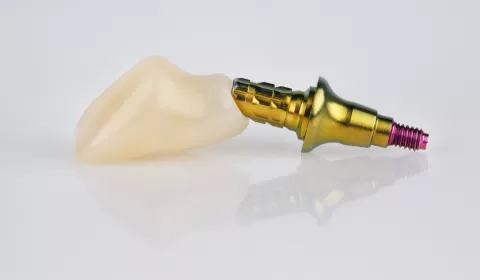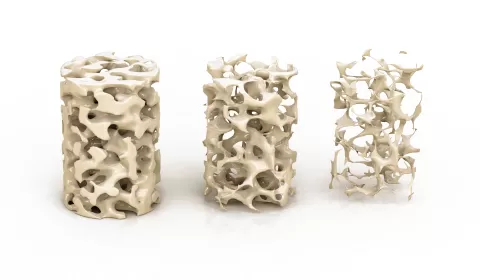
Can Smokers Get Dental Implants?
Smoking is a significant risk factor that negatively impacts both the healing process and the long-term success of dental implants. To get the best results from your implant, consider quitting. This smoke is essential for your health. #implanttr
Can Smokers Get Dental Implants?
Risks, Success Rate, and What You Should Pay Attention To
Almost every smoker who wants to get an implant has the same question in mind:
"Doctor, I smoke. Can I get an implant, and will it hold?"
On one hand, a habit that has lasted for years; on the other, a long-term treatment investment…
The good news is: Implants can be placed in smokers.
But the bad news is: Your risk is significantly higher compared to non-smokers.(PMC)
In this article, I will explain in plain language how smoking affects implant success, which risks it increases, and what you can do to reduce these risks.
How Does Smoking Affect Implant Success?
The most critical thing for implant success is the solid fusion (osseointegration) between the placed screw and the jawbone.
Smoking negatively affects this process in several ways:
-
Impairs blood circulation:
Nicotine constricts blood vessels, reducing blood and oxygen flow to the tissues. This slows down wound healing. -
Weakens the immune system:
The body's defense against infections decreases, raising the risk of inflammation around the implant (peri-implant diseases). -
Damages gum and bone health:
Smoking is one of the most important risk factors for gum disease, bone loss, and oral infections. The same risk applies to the area around the implant.
The result:
The environment necessary for the implant to integrate and last long-term is made more difficult from the very start by smoking.
How Much Does the Risk of Implant Failure Increase in Smokers?
According to various studies, smokers have:
-
A risk of implant failure that is approximately 2–3 times higher than non-smokers.
-
Significantly increased rates of inflammation around the implant (peri-implantitis) and bone loss.
This means:
-
It's not "You can't get an implant just because you smoke,"
-
But it is correct to say, "The same implant is at greater risk in you."
Therefore, in a patient who smokes:
-
Planning must be done more carefully,
-
The dentist must absolutely take the smoking habit into account,
-
The patient must also be prepared not just to get an implant, but to review their habit.
Is "I Smoke, So I Can't Get an Implant" True?
No, smoking alone is not an automatic "rejection" reason for an implant.
But it's necessary to know these facts:
-
The risk of complications is higher in smokers.
-
This risk increases even more, especially in heavy smokers (1 pack or more per day).
-
If multiple implants are to be placed, or if there are long bridges or bone graft applications, the risks multiply.
Most dentists follow this path:
-
They explain the risks to the smoking patient openly and clearly.
-
They recommend quitting / reducing smoking before and after treatment, if possible.
-
For a patient who says, "I can never quit or reduce smoking," they shape the treatment plan accordingly.
The decision is a risk-benefit decision that you and your dentist will make together.
In Which Stages Is Smoking Particularly More Harmful?
1. During Surgery and the Healing Period
The first weeks and months after the implant is placed:
-
Good blood circulation,
-
Easy oxygen delivery to tissues,
-
A strong working immune system
are very important.
Smoking:
-
Can cause wounds to heal slowly,
-
Lead to openings in the suture line,
-
Increase the risk of infection.
This can disrupt the implant's fusion with the bone (osseointegration), leading to failure.
2. In the Long Term
Even if the implant fuses with the bone:
-
Continuous smoking,
-
Increases the risk of chronic inflammation in the gum and bone tissue (peri-implantitis).
In this case:
-
Bone loss around the implant,
-
Loosening of the implant,
-
Even complete loss of the implant is possible.
So smoking affects not just the "surgery," but the entire lifespan of the implant.
How True Is the Thought "I Smoke Little, So the Harm Is Less"?
Many patients think, "I smoke 3–5 cigarettes a day, that's not a lot."
Scientific studies show:
-
It's true that risk increases as the amount of smoking increases.
-
But "light smoking" also negatively affects implant success; there is no safe level.
Furthermore:
-
It's not just traditional cigarettes,
-
Nicotine and heat in products like e-cigarettes and hookah can also affect blood circulation and tissues through similar mechanisms.
Therefore:
"I don't smoke much anyway, nothing will happen to me"
is not a very reliable statement.
What Is the Ideal Approach for an Implant in a Patient Who Smokes?
The most ideal:
To quit smoking completely the moment the decision for implant treatment is made.
Even if this is not possible, many sources and clinics report that:
-
Not smoking for at least 1–2 weeks before the operation,
-
And for at least 2 months after the operation, is much safer for healing.
But the most important sentence here is:
You must determine the most correct duration and strategy for you together with your dentist and, if necessary, your pulmonologist / family doctor.
Making sudden stop-start decisions on your own can be challenging both for nicotine addiction and general health.
If You Smoke, What Can You Do Before and After an Implant?
Quitting completely is the healthiest; but to at least reduce the risk, the following are very important:
-
Honestly share your smoking habit with your dentist
– Tell them how much, for how long, and what type of products you use.
– This information is vital for planning. -
Aim to quit or seriously reduce
– Seek support from smoking cessation clinics, your family doctor if necessary. -
Perfect your oral hygiene
– Careful brushing at least twice a day,
– Interdental brushes, dental floss, mouthwash if needed,
– Regular dental cleaning. -
Be faithful to check-ups
– Your dentist will want to check your implants at regular intervals.
– An inflammation detected early can often be saved. -
Reduce other risks as well
– If you have diabetes, get it under control,
– Don't put excessive pressure on the implants with very hard foods,
– If you have nighttime teeth grinding (bruxism), use a night guard.
Should Smokers Get Implants or Not?
There is no single correct answer to this question; it should be evaluated

M. İhsan GÜRSOY / Diş Hekimi
Author