Can Implants Be Placed İn Patients With Osteoporosis?
Osteoporosis isn't a definite barrier to dental implants. Studies show survival rates can be close to healthy individuals. Key factors are severity, medications, and oral hygiene. A team assessment is crucial. Implanttr can be safely applied in suitable cases.
Can Implants Be Placed in Patients with Osteoporosis? Is It Possible, What Are the Risks?
If you have been diagnosed with osteoporosis (bone loss) and have missing teeth, you probably have this question on your mind:
"Doctor, I have osteoporosis, can I get implants, is it risky?"
Most people think, "if the bone is deteriorating, implants won't hold." However, current scientific studies show that controlled osteoporosis alone is not an absolute contraindication for implants, and implant success rates are generally close to those in healthy individuals.
But it's not just about osteoporosis; the medications you use are also a factor; especially bone loss medications (some injections, pills) are a separate topic in terms of jawbone health.
In this article, we will explain in simple terms how safe implants are for patients with osteoporosis, which situations require more caution, and what topics you should discuss with your doctor.
What Does Osteoporosis Mean? Does It Affect the Jawbone Too?
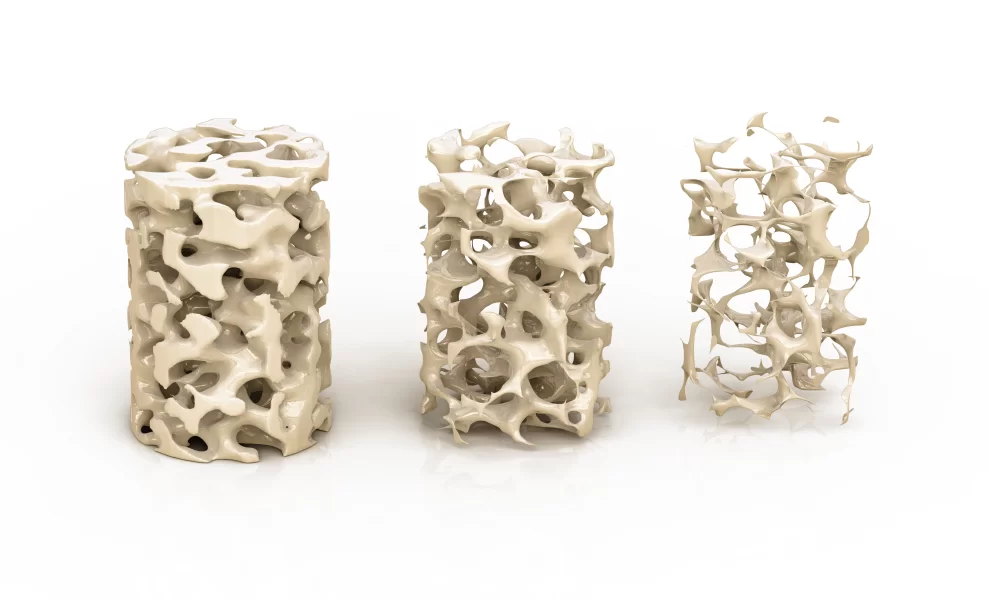
Osteoporosis is a systemic disease where bone density and quality decrease, making bones more fragile. It is most commonly associated with fracture risk in areas like:
-
Hip,
-
Spine,
-
Wrist.
However, bone loss can also affect the jawbones.
In the jawbone:
-
Bone density may decrease,
-
The bone thickness in the area planned for the implant may be thinner than before,
-
The bone healing rate may be slightly slower than normal in some patients.
This does not mean implants cannot be placed; it only indicates that planning needs to be done more carefully.
Can Implants Be Placed in Patients with Osteoporosis?
Scientific studies show that there is no significant difference in implant survival between patients with osteoporosis and healthy individuals. Success rates are above 90% in both groups.
In summary:
-
If your bone loss is under control,
-
If your general health is suitable,
-
If there is sufficient volume in your jawbone (it can be supported with bone graft if necessary),
in most cases, implant treatment can be a possible and successful option.
So:
The thought that
"I have osteoporosis, I definitely cannot get implants"
is not correct in light of current information.
The Real Critical Point: Osteoporosis Medications (Bisphosphonates, Denosumab, etc.)
When planning implants for patients with osteoporosis, bone density is not the only important issue. Equally important is which medications you are using for bone loss.
Some osteoporosis medications (especially those used long-term):
-
Bisphosphonate group drugs (oral or intravenous injections),
-
Injections like Denosumab that reduce bone resorption,
can, albeit very rarely, lead to healing problems in the jawbone and a condition called "medication-related osteonecrosis of the jaw (MRONJ)". This risk is more pronounced with high doses and when used alongside cancer treatment, but it is not completely zero even at osteoporosis doses.
Therefore:
-
Which medication,
-
For how long,
-
At what dose you are using,
must be evaluated together by your internist / endocrinologist / orthopedist and your dentist before an implant decision is made.
Which Osteoporosis Patients Should Be Evaluated More Closely?
In the following groups, all jaw surgery procedures, including implants, are planned more carefully:
-
Those who have used bisphosphonates for many years (e.g., 4-5 years and above),
-
Especially those receiving intravenous (IV) bisphosphonates,
-
Those using high-dose bone medications due to cancer treatment in addition to osteoporosis,
-
Those with a previous history of jawbone necrosis (MRONJ),
-
Those who also carry additional risk factors like uncontrolled diabetes, smoking, advanced age.
If an implant decision is to be made in this group:
-
Approval from your medical doctor (endocrinologist / orthopedist / oncologist),
-
Special protocols according to the type and duration of the medication,
-
Very good oral hygiene and close follow-up are essential.
In some high-risk patients, doctors may recommend more conservative (less risky) prosthetic solutions instead of implants; this is not a "rejection" but a choice made to protect you.
What Are the Advantages of Implants in Patients with Osteoporosis?
It may sound interesting, but in correctly selected osteoporosis patients, implants also have some advantages for the bone:
-
Since the implant transmits chewing forces to the jawbone, it creates a "functional stimulus" within the bone.
-
Bone that is in use deteriorates more slowly than bone that bears no load at all.
-
Instead of the localized pressure caused by the constant pressure-friction of removable dentures, implant-supported fixed or snap-on dentures can provide a more balanced load distribution.
The result:
-
Better chewing,
-
Less denture movement,
-
Better nutrition,
can positively contribute to the general health of elderly osteoporosis patients in particular.
Pre-Implant Preparation: What Information is Needed?
If you have bone loss and are considering implants, it would be very helpful to come to your dental appointment with the following information:
-
Bring your latest DEXA (bone density) report if you have one.
-
Have a note with details of your osteoporosis medications:
– Name,
– Dosage,
– How often you take it (daily/weekly/monthly),
– How many years you have been using it. -
Have your list of other systemic diseases (diabetes, heart, blood pressure, etc.) and medications ready.
Your dentist may refer you to specialties such as:
-
Internal Medicine,
-
Endocrinology,
-
Orthopedics,
-
Oncology
if necessary. The goal is to perform the implant surgery under the safest conditions for you.
Points the Doctor Pays Attention to During the Surgical Stage
During implant surgery for patients with osteoporosis, the doctor:
-
Selects an appropriate implant length and diameter according to the density of the jawbone.
-
Plans the drilling protocol more gently; avoids unnecessary heat increase in the bone.
-
Carefully evaluates the implant's primary stability (initial tightness and firmness); if necessary, may extend the healing period slightly.
-
In some cases, may prefer the classical healing period for the implant to fully integrate with the bone, rather than immediately loading it (placing a fixed tooth the same day).
All these are technical adjustments made to increase the chance of success; you will not feel any extra difficulty on the patient's side.
Healing Period: What Should You Pay Attention To?
Healing in osteoporosis patients often proceeds normally; however, you should still pay extra attention to the following:
-
Take the medications (painkillers, antibiotics if prescribed) given by your doctor regularly.
-
Keep the operation area clean; use a soft brush and antiseptic mouthwash for the recommended duration.
-
If you smoke, try to <

M. İhsan GÜRSOY / Diş Hekimi
Author