The Stages Of Dental Implant Treatment
Dental implant treatment is a multi-stage process, starting with exams and planning. After placement and healing, custom crowns are attached. With proper care, implants can last for years. Learn more at İmplanttr.
Stages of Implant Treatment
Step by Step from the First Examination to the Final Tooth
Many people who want to get dental implants share the same concern:
"How many visits will I need, how long will the process take, what awaits me?"
The unknown always seems more frightening. However, implant treatment, when explained correctly, is a highly predictable and planned process.
In this article, we will explain the implant treatment process step by step from the first examination to the final check-up. This way, the "how will it happen?" questions in your mind will become a bit clearer.
First Step: Detailed Examination and Consultation
Everything begins with your initial consultation with your dentist. During this appointment:
-
Your teeth, gums, and jaw structure are examined in detail.
-
The number of missing teeth, the condition of adjacent teeth, and your bite (occlusion) are evaluated.
-
Your previous dental treatments, surgeries, and any problems you've experienced are discussed.
-
Your systemic diseases such as diabetes, hypertension, heart conditions, osteoporosis, and the medications you use are reviewed.
At this stage, the dentist tries to get to know not just your mouth, but you as a whole. Because an implant is not just a "screw"; it's a treatment that will become a part of your body.
X-Ray and 3D Tomography if Needed
In implant planning, just looking in the mirror is not enough; X-ray images are essential.
Typically:
-
Initially, a panoramic X-ray (showing the entire mouth) is taken.
-
The bone thickness, height of the implant area, and its distance to nerves and sinus cavities are examined.
-
When more precise measurements are needed, a 3D tomography (CBCT) may be requested.
This allows for clear answers to questions like:
-
"What length and diameter of implant can we place in this area?"
-
"Is the bone support sufficient, is bone graft or sinus lift needed?"
This stage is like the roadmap of the treatment.
Discussing the Treatment Plan: How Many Implants, Which Prosthesis?
After the examination and imaging, the dentist shares a treatment plan with you. This plan covers:
-
The number of implants to be placed,
-
The areas where they will be applied,
-
Whether a single crown, bridge, or full denture will be placed on them,
-
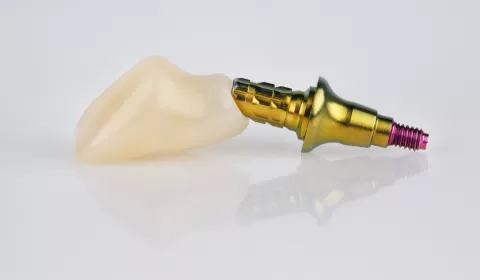
The type of crown to be used (porcelain, zirconia, etc.),
-
The approximate duration and number of sessions,
-
The estimated cost.
You should ask without hesitation during this consultation:
-
"What is the total timeframe I'm looking at?"
-
"Will I have a temporary tooth, or will I have a gap?"
-
"Are any additional procedures (bone graft, sinus lift) necessary?"
The more questions you ask, the more transparent and secure the process becomes.
Tooth Extraction and Bone Preparation if Necessary
For some patients:
-
There may be teeth that need to be extracted and cannot be saved.
-
Bone loss may have occurred during or after a previous tooth extraction.
-
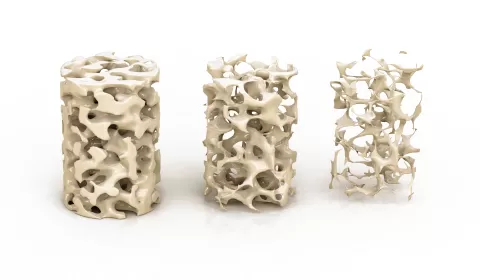
In areas that have been toothless for years, the bone may have significantly thinned.
In these cases, the following procedures come into play:
-
Tooth Extraction:
Teeth to be extracted are gently removed, and the area is cleaned. In some cases, an implant can be placed in the same session as the extraction; in other situations, waiting for the area to heal is necessary. -
Bone Graft Application:
Bone graft material may be added to areas where the bone has thinned or resorbed to prepare a foundation for the implant. -
Sinus Lift (Sinus Augmentation):
If there is insufficient bone height in the upper jaw back area, the sinus floor can be gently lifted and bone support added underneath.
These additional procedures may extend the treatment time, but they are often necessary investments for a long-lasting and safe implant.
Implant Surgery: The Actual Fixture Placement Stage
After planning is complete and, if necessary, extraction and bone preparation are done, it's time for the implant surgery.
In a classic single implant procedure:
-
The procedure is usually performed under local anesthesia, completely numbing the area.
-
A small flap is opened in the gum to expose the underlying bone.
-
A socket matching the implant's diameter is prepared using special drills.
-
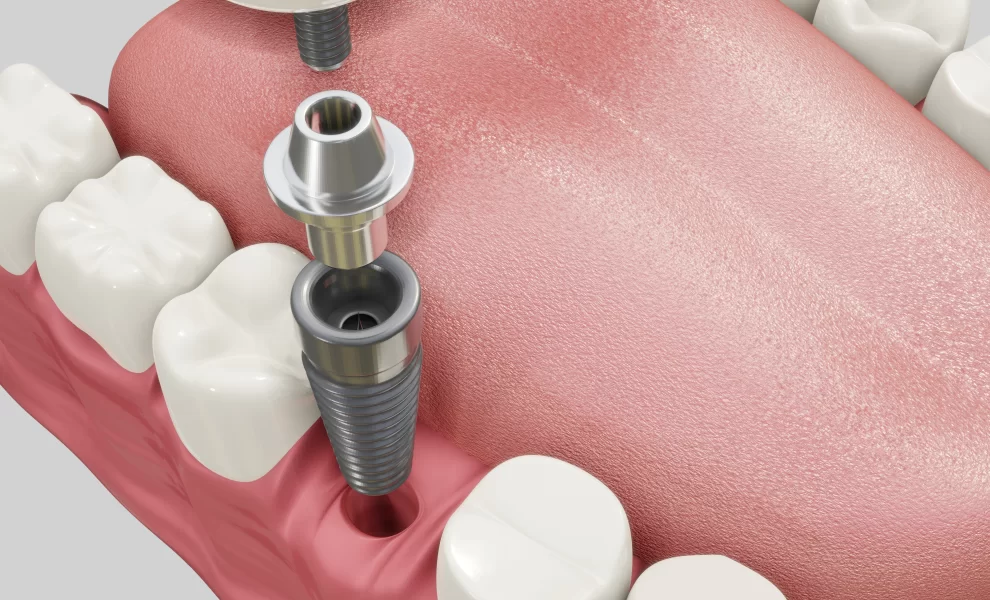
The implant fixture is placed into this socket and tightened.
-
The site is closed and sutured.
During the procedure, the patient typically feels:
-
Not pain, but more of a pressure and vibration sensation.
-
The procedure duration can vary between 15–60 minutes depending on the case.
Multiple implants can also be placed in the same session. After the procedure, the dentist provides recommendations such as:
-
Painkillers,
-
Antibiotics if deemed necessary,
-
Ice application to reduce swelling.
Healing Period: The Implant Fusing with the Bone
After the implant is placed, one of the most critical stages is the fusion process with the bone, which we call osseointegration.
Generally:
-
A waiting period of approximately 2–3 months in the lower jaw,
-
And around 3–4 months in the upper jaw may be required (varies by individual).
During this time:
-
The implant may be covered by the gum (submerged healing),
or -
A small healing abutment may be attached on top (non-submerged healing).
In some special cases and with suitable bone quality, a temporary tooth can be attached on the same day the implant is placed. This is called "immediate loading." However, this is not suitable for every patient; the decision must always be made by the dentist.
Important points during the healing period:
-
Protecting the surgical site,
-
Using prescribed medications regularly,
-
Reducing or quitting smoking,
-
Maintaining good oral hygiene.
Temporary Teeth: An Interim Solution for Aesthetics and Comfort
For patients with missing front teeth, the concern "Will I be without front teeth for months?" is very common. In suitable cases:
-
A temporary removable denture (a denture that can be taken out),
-
A temporary bridge,
-
Or temporary crowns attached to the implants
can be used to make the patient's daily life easier in terms of aesthetics and function.
The role of these temporary teeth is to manage the smile and chewing and guide the gum shape until the final, permanent teeth are made.
The Superstructure Stage: Taking Impressions and Making the Teeth
After the implants have fused with the bone and healing is complete, it's time for the superstructure, meaning the actual visible teeth.
At this stage:
-
The implant is uncovered (in submerged healing), and a healing abutment is attached.
-
A few days later, after your gum has taken the

M. İhsan GÜRSOY / Diş Hekimi
Author